Tree removal and felling in Kildare, Dublin and Meath
Some trees have simply outgrown their spot. Others are dead, leaning or damaged after a storm. We take them down in a controlled way and leave the area clean.
A tree that's dead, badly split, leaning more than it used to, or lifting the ground around its base is worth getting looked at quickly.
Then there are trees that are healthy but in the wrong place: too close to the house, shading the whole garden, or with roots near drains and foundations.
How we help
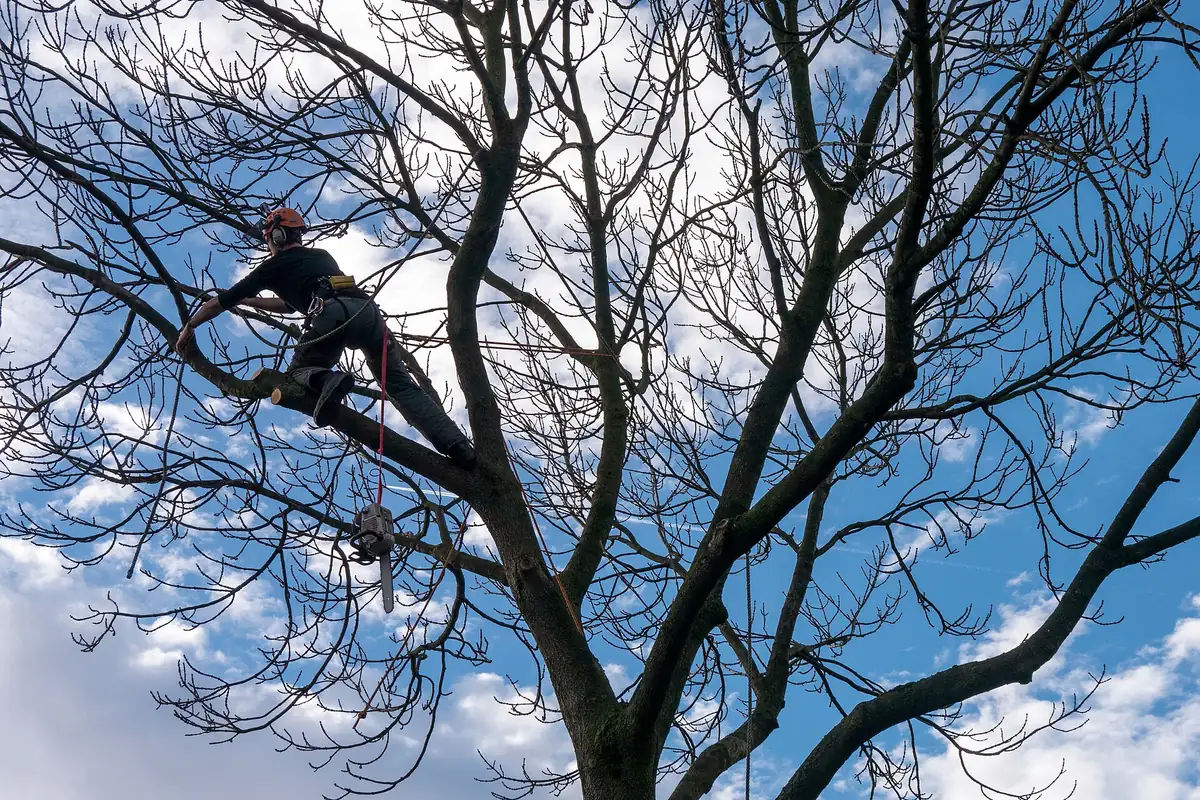
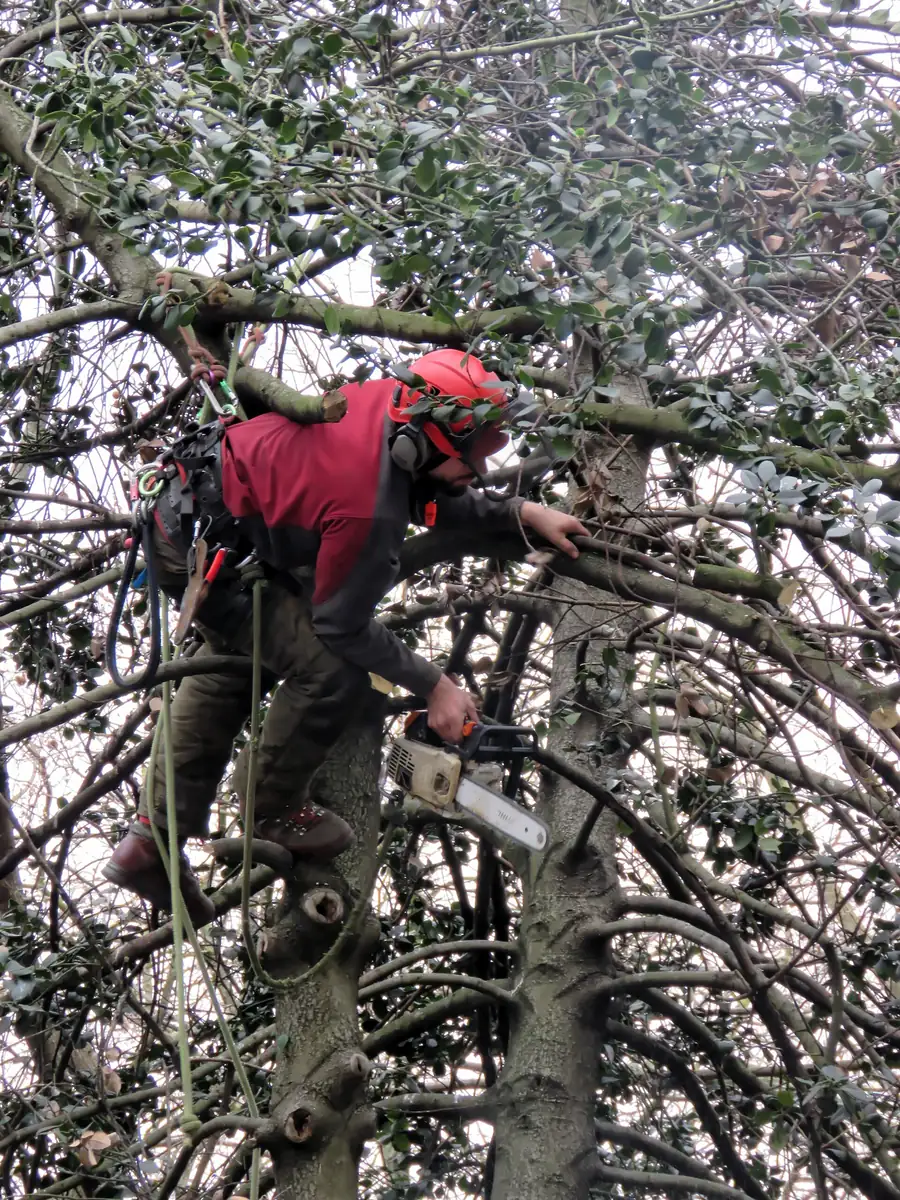
In most gardens there isn't room to fell a tree in one go. Instead it's taken down in sections from the top, with each piece cut and lowered in a controlled way.
Where there's open space, a tree can sometimes be felled whole. Either way, the method is decided on site after looking at the tree, the ground and everything around it.
What's included
Assessment of the tree and the safest method
A clear written quote
Sectional dismantling or felling as appropriate
Cutting of timber to manageable lengths
Clearing the site of branches and debris
Stump options discussed (see stump removal)
Useful for
Dead, dying or diseased trees
Storm-damaged or leaning trees
Trees too close to houses, walls or drains
Clearing space for an extension, driveway or new garden
Conifers and leylandii that have grown out of control
Before we start
Safety, access and permissions
Every site is different. These are the things that shape how a job is done — and what it costs.
Tree removal is skilled, high-risk work and should never be attempted as DIY with a ladder and chainsaw.
Access, nearby buildings, glasshouses, fences, parked cars and overhead or underground services all affect how a tree can be taken down.
Protected trees (Tree Preservation Orders, conservation areas) need council consent. Larger-scale or rural felling may also need a felling licence. If unsure, check before booking.
Trees near overhead power lines must be coordinated with ESB Networks.
Green waste: Whether green waste is taken away, chipped on site or left neatly for your brown bin depends on the job. We'll set this out clearly in your quote so there are no surprises.
The process
How the job works
01
Step 1: Tell us about the tree
Photos showing the whole tree and what's around it help us plan.
02
Step 2: Site check and quote
We confirm the method, any access needs and what happens to the timber and stump.
03
Step 3: Controlled removal
The tree is dismantled or felled, with the work area kept clear and safe.
04
Step 4: Clear-up
Branches and debris are cleared and the area left tidy.
Can you remove a tree with no side access to the back garden?
Often, yes. It just takes more planning. Many Dublin terraces have no side passage, so branches and timber may need to come through the house. We'll talk through floor protection and how the waste will be moved before agreeing the job.
Do I need a licence to cut down a tree in my garden?
Many garden trees near a house can be removed without a licence, but protected trees always need council consent and some larger or rural trees need a felling licence. If there's any doubt, check with your council or the Department of Agriculture's forestry service first.
What happens to the stump?
It can be cut low and left, or removed as a separate job. We'll explain the options in your quote. See our stump removal page for more.
Can I keep the logs?
Usually, yes. Just tell us when you ask for a quote and we'll cut them to a length you can handle and stack them where you want.
Coastal wind in Howth and Malahide, fast-growing estate hedges in Swords, and mature gardens in Castleknock. Here's what North Dublin gardens need most.
Read the guide
Get a quote for tree removal
Send a few photos on WhatsApp or fill in the quote form, and we'll come back to you with a clear, straightforward price.